KAICIID and African Union Commission Sign New Agreement, Deepening a Decade of Partnership for Peace in Africa

A renewed Memorandum of Understanding and a high-level roundtable in Addis Ababa mark ten years of formal cooperation and signal a more structured, continent-wide approach to dialogue-driven peacebuilding.
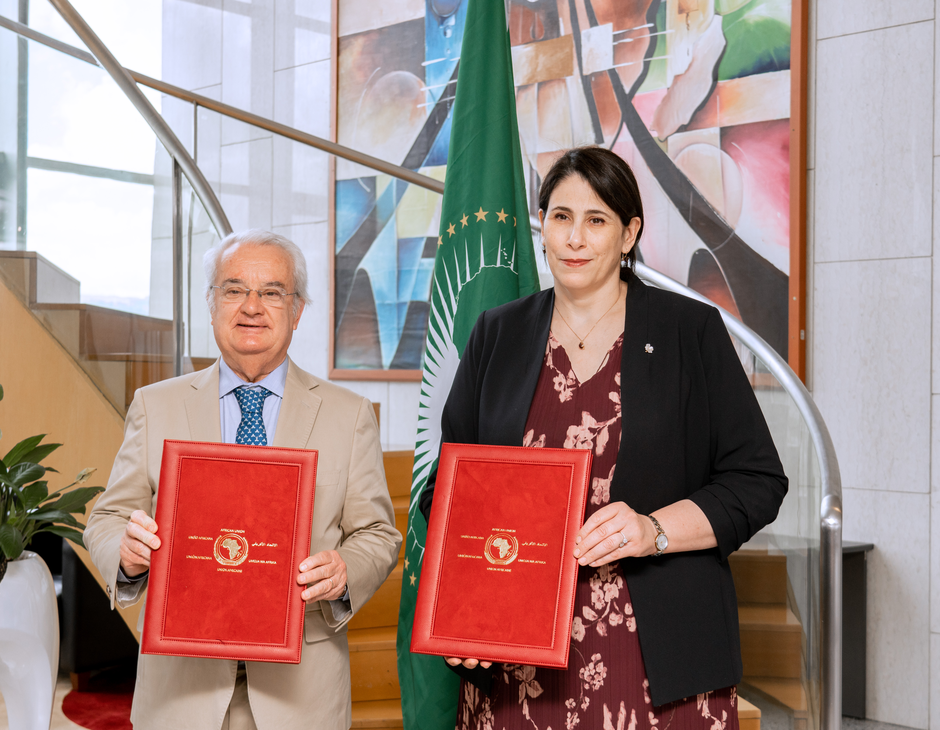
Ten years after their first formal agreement, The International Dialogue Centre - KAICIID and the African Union Commission (AUC) today signed a renewed Memorandum of Understanding at AU headquarters in Addis Ababa, Ethiopia, , 20 April 2026, setting the terms for a deeper, more structured phase of cooperation on interreligious dialogue, social cohesion, and conflict prevention across Africa.
Marking the occasion were the Deputy Chairperson of the African Union Commission, H.E. Ambassador Selma Malika Haddadi, and the Acting Secretary General of the International Dialogue Centre – KAICIID, Ambassador António de Almeida Ribeiro.
“Africa’s peace and security challenges are not going to be resolved through political frameworks alone. Communities hold trust, and religious leaders hold influence. When those actors are equipped and supported, something real changes,” stated Ambassador António de Almeida Ribeiro. “This partnership with the African Union Commission is built on these tangible outcomes, moving dialogue from an abstract concept into real change taking place at the community level,” added KAICIID’s Acting Secretary General.
“The African Union Commission values this partnership as it reinforces our collective efforts to promote mutual understanding, prevent conflict, and strengthen resilience within our societies, in line with Agenda 2063. Dialogue remains central to building a peaceful and united Africa, and this collaboration strengthens our ability to translate that vision into action on the ground,” said H.E. Ambassador Selma Malika Haddadi, Deputy Chairperson of the African Union Commission.
A Decade of Impact
The first MoU dates to 2013. Since then, the two organisations have jointly revitalised the AU Interfaith Dialogue Forum, convening it in Nigeria (2016), Chad (2018), Rwanda (2023), and Namibia (2025), building a structured continental space where religious leaders, policymakers, and civil society engage directly on peace and security.
On the ground, KAICIID's Africa Programme has ensured that the practical work has gone further. In the Central African Republic, KAICIID has supported Local Peace and Reconciliation Committees and interreligious dialogue structures in communities living with prolonged conflict. In Nigeria, it helped reignite the Interfaith Dialogue Forum for Peace (IDFP) on community early warning systems, and is now supporting interfaith engagement ahead of the 2027 elections. In northern Mozambique, it has facilitated intra-community dialogue in the conflict-affected province of Cabo Delgado.
What comes next
The renewed MoU anchors KAICIID's work within the AU's Agenda 2063 framework, particularly its aspiration for a peaceful and secure Africa. It creates formal channels for collaboration across key AU departments, including Political Affairs Peace and Security, Civil Society and Diaspora, Women and Gender, Health and Humanitarian Affairs, and Partnerships and Resource Mobilisation.
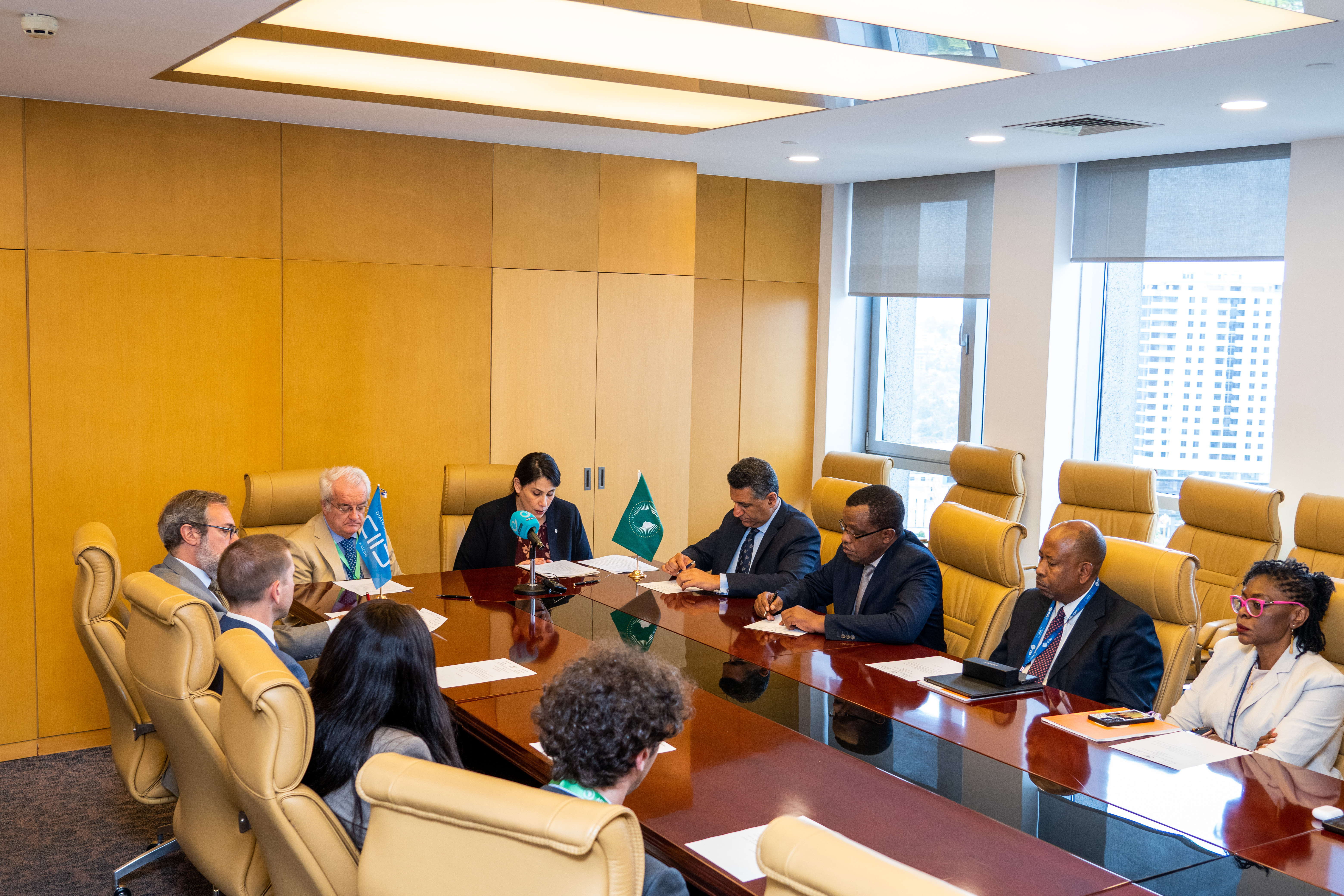
The signing was followed by a high-level roundtable on “Fostering a Culture of Transformative Dialogue in the Africa Region,” attended by senior African Union Commission officials, ambassadors of KAICIID’s founding member states, Austria, Portugal, the Kingdom of Saudi Arabia and Spain, as well as Nuncio Archbishop Brian Ngozi Udaigwe, representing the Holy See as a founding observer.
The discussions come at a moment when many African societies are navigating overlapping pressures: intercommunal tensions, conflict-driven displacement, climate stress, and rising hate speech. The roundtable focused on how dialogue can be embedded more systematically into continental peace responses, not as a soft add-on, but as a practical tool.