
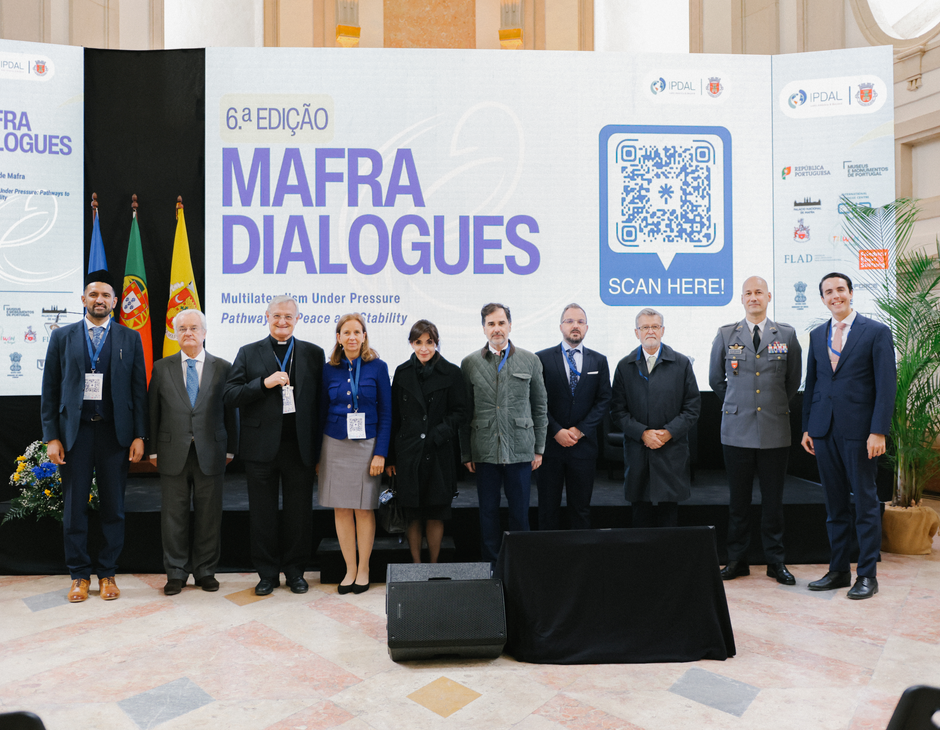
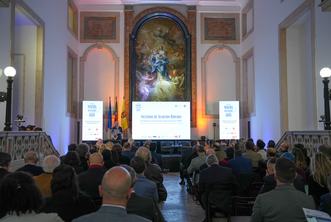
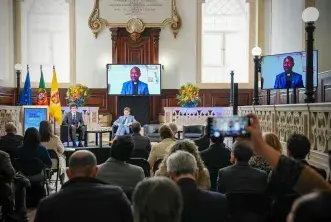
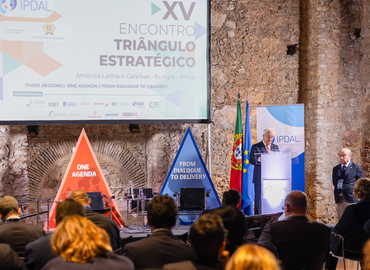
With the historic Convent of Mafra as the backdrop, once again the Mafra Dialogues brought together political leaders, academics and faith actors to examine the pressures facing international cooperation. On it's 6th edition, the gathering was the fourth edition organised by Institute for the Promotion of Latin America and the Caribbean (IPDAL) in partnership with International Dialogue Centre – KAICIID in collaboration.
With “Multilateralism Under Pressure” on the agenda the day kicked off with the consolidation of the recent work developed by IPDAL and KAICIID with the signing memorandum of understanding (MoU). Then the Holy See took the stage, with a message from Cardinal Pietro Parolin, Secretary of State of the Holy See, delivered by Archbishop Andrés Carrascosa Coso, the newly appointed Apostolic Nuncio to Portugal. The message was clear: diplomacy grounded in dialogue and consensus is being replaced by force-based politics. It called for sincere dialogue, respect for international humanitarian law, progressive disarmament and the ethical use of new technologies as concrete pathways towards peace.
"The Mafra Dialogues arise precisely from the conviction that multilateralism does not belong to the past, but represents a realistic and necessary path to facing the challenges of our time." — Message from Cardinal Pietro Parolin, Secretary of State of the Holy See
The opening high-level panel reflected a shared sense of urgency. Sanam Naraghi Anderlini, CEO of the International Civil Society Action Network (ICAN) and long-standing KAICIID partner, warned that long-standing international norms are under serious strain and called on civil society to act when governments fail to. While Emilce Cuda of the Pontifical Commission for Latin America at the Holy See challenged that peace cannot be separated from social justice, noting that 22 people are killed daily in South America due to ongoing conflict. Camilla Habsburg-Lothringen, Imperial and Royal Highness Archduchess of Austria and Princess of Tuscany, underlined the responsibility of media to foster inclusive and informative information rather than deepen division.
Ambassador António de Almeida-Ribeiro, Acting Secretary General of KAICIID, participated in the initial panel, stating that religious leaders have an important role globally, stating that when His Holiness, the Pope speaks, his message resonates beyond regions, cultures and religions, into communities.
"The challenge is not only to create spaces for dialogue, but to ensure they are able to generate trust, strengthen inclusion and foster mutual understanding. This is the role that religious leaders can have." — Ambassador António de Almeida-Ribeiro, Acting Secretary General of KAICIID
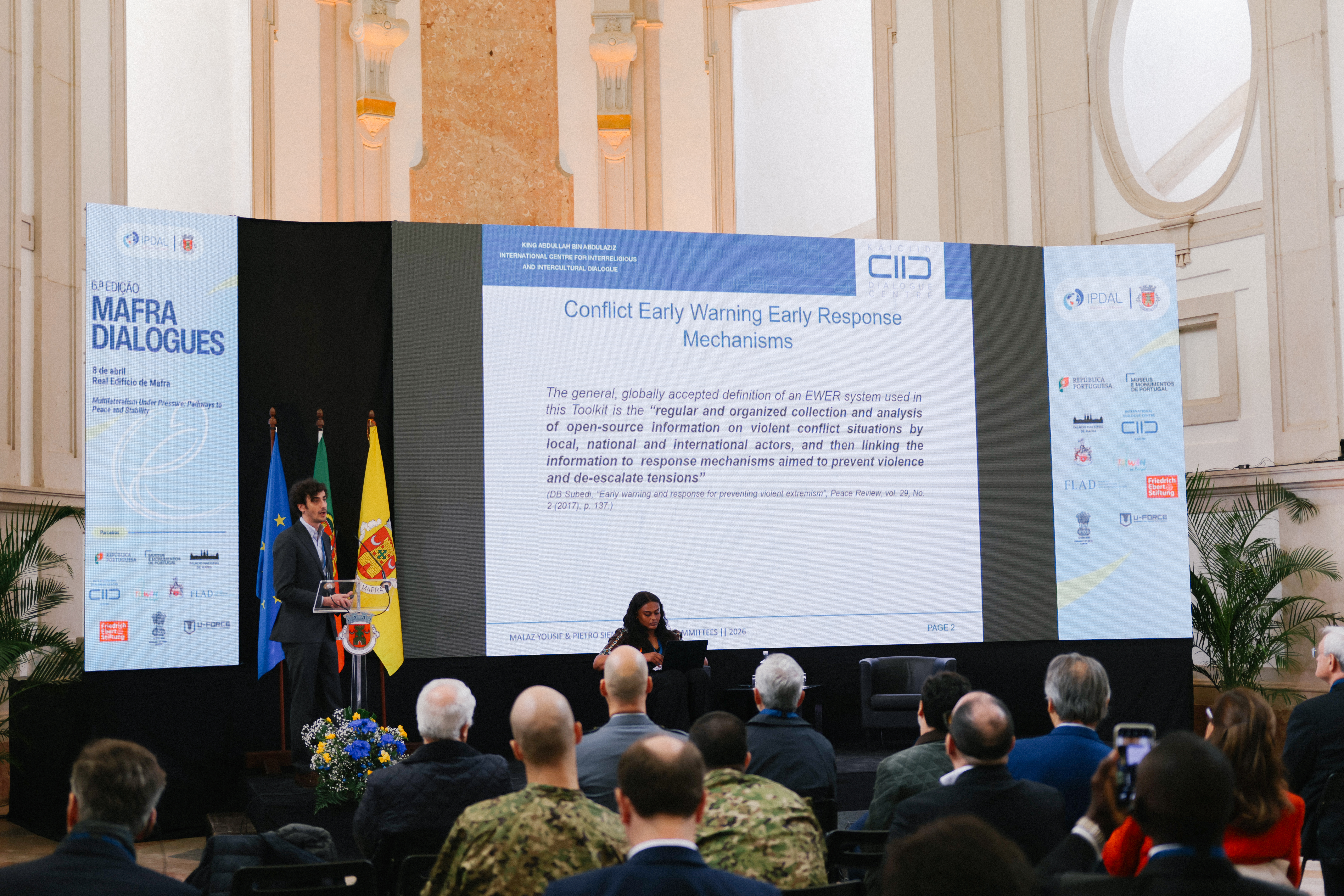
KAICIID's Africa Region team led two afternoon workshops on interreligious dialogue as a tool for conflict prevention and early warning, grounding the day's policy discussions in practical field experience. The day closed with a KAICIID-facilitated scripture reading workshop on peacebuilding and interreligious understanding, bringing together Muslim, Christian and Jewish religious leaders
The new partnership extends KAICIID's regional reach across 23 Member States in Latin America and the Iberian Peninsula,…
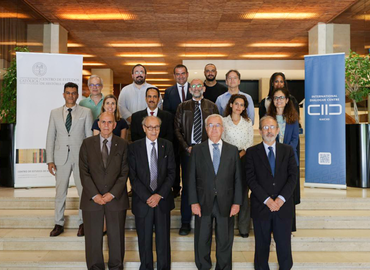
Leading scholars of religious manuscripts gathered in Lisbon to examine how centuries of translation, copying and exchange…