Reading into Conflict: Between Empathy and Evaluation

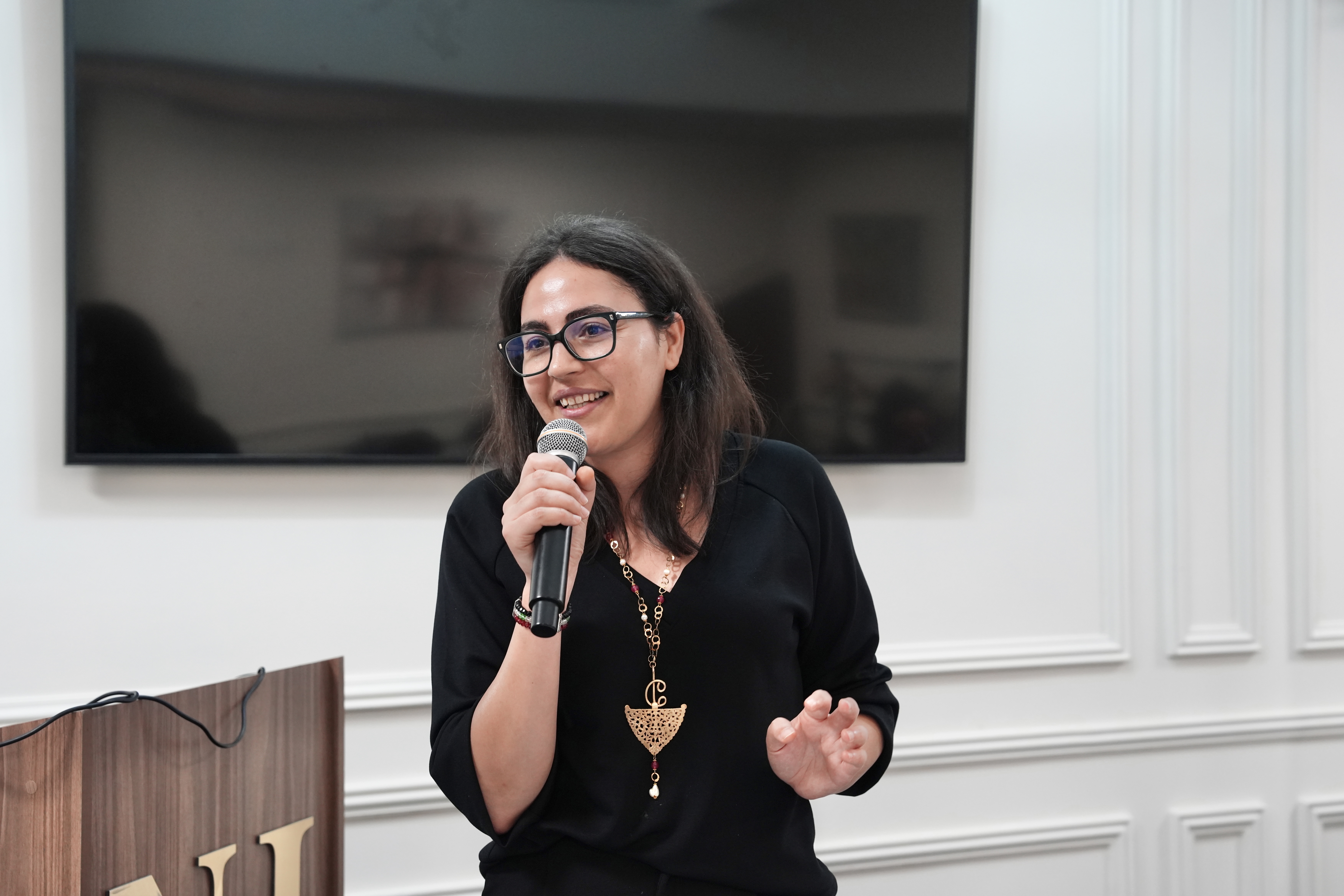
For a moment, the silence felt unfamiliar, almost intrusive, after days of reading voices that carried loss, urgency, and a quiet insistence on dignity. As a programme officer, I am trained to evaluate: to assess feasibility, impact, sustainability. To remain structured, fair, and consistent. But this year, the task resisted neat frameworks. The applications were not only proposals; they were fragments of lived reality and torn faces from Palestine, Sudan, and Syria, places where conflict has not just disrupted life, but reshaped the meaning of it.
I found myself inhabiting multiple roles at once. The professional, committed to rigor and impartiality. The curious researcher, attentive to context, evidence, and patterns. And the person from the region, someone who recognizes the cadence of grief in a sentence, who understands what is said between the lines, and who cannot entirely detach from the weight of what is being described.
But despite my direct work with these contexts for five years, and a familiarity I thought I had built over time, there was another layer to this positioning, one that I became increasingly aware of as I read. I come from Tunisia, a country that is, in many ways, socially and religiously more homogeneous. Our challenges are real, often profound, but they are shaped differently. We do not navigate, in the same immediate way, the daily negotiation of identity across deeply divided religious or ethnic lines within the same neighbourhoods, the same streets, the same shared spaces.
And so, as I read applications describing fractured coexistence, neighbors who had lived side by side for decades now unable to trust one another, I found myself reading not only with empathy, but also with a quiet uncertainty. How much can I truly understand this experience? What does it mean to live with “the other” when that other has become a source of fear? How does distrust settle into the ordinary fabric of daily life?
This awareness did not distance me from the applications. If anything, it made me more attentive. I read more slowly. I lingered on details. I tried to listen not only to what was being said, but to what I might be missing.
In previous years, the initiatives I evaluated often carried a sense of cautious optimism. They spoke of coexistence, of dialogue as a bridge, of communities choosing, despite everything, to imagine a shared future. This year felt different. This year felt heavier. The tone had shifted. Hope was still present, but it was quieter, more fragile, often buried beneath layers of immediate survival.
One application from Sudan described a local network of women who had transformed their homes into informal mediation spaces. With formal institutions fractured, they relied on trust, kinship ties, and sheer persistence to de-escalate tensions between displaced families and host communities. There was no mention of large budgets or advanced methodologies, only the steady work of listening, of showing up, of refusing to let violence define relationships.
From Syria, one initiative centered around something as simple-and as profound-as food. A group of women had begun documenting and sharing traditional recipes from their communities, gathering stories alongside ingredients. At first glance, it seemed nostalgic, almost gentle compared to the urgency of other proposals. But as I read more closely, the weight behind it became clear. Each recipe carried a memory of a time when kitchens were shared across differences, when neighbors tasted each other’s traditions without suspicion. The act of cooking became a quiet form of resistance against erasure, a way of saying: we were once more connected than we are now.
In Palestine, another application stayed with me long after I finished reading it. It described a small initiative led by teachers who had lost access to formal classrooms due to repeated disruptions. Instead, they began holding storytelling circles for children in shelters and temporary spaces. The idea was simple: children were invited to tell stories, not necessarily about the present, but about anything they wished to imagine or remember.
What emerged, according to the proposal, was telling. Many of the children spoke of ordinary moments that now felt distant, playing with neighbors, visiting each other’s homes, celebrations that crossed family and community lines. But alongside these memories, there were also hesitations. Some children began to redraw boundaries in their stories, separating characters along lines that mirrored the divisions around them.
The facilitators noted this with concern, but also with care. Their role was not to correct the children, but to gently reintroduce complexity, to remind them, through stories, that identities could coexist, that difference did not have to mean separation. It was a small effort, almost fragile in its scope, but it carried a profound question: how early does division take root, and how can it be softened before it hardens?
As I moved through these applications, another pattern emerged, one that was both beautiful and unsettling. Many initiatives looked back. They invoked memories of a past described as more tolerant, more cohesive, less burdened by division. Stories of neighbors who celebrated together, of communities where religious and ethnic differences existed but did not define relationships.
I found myself questioning this collective turning toward the past. What changed? What shifted so deeply that people who lived side by side for decades reached a point of rupture so complete that difference became a fault line rather than a feature of shared life?
There is no single answer. Conflict is shaped by political decisions, by histories of power and exclusion, by narratives that are reinforced over time. But reading these reflections, I sensed something else as well, a longing not just for stability, but for a version of society where difference did not feel dangerous.
And yet, even as these memories were evoked, the present reality remained stark. The fragmentation of societies in Palestine, Sudan, and Syria is not only physical, it is emotional, social, and deeply internalized. Shared pain does not automatically lead to shared understanding. Sometimes, it deepens distance.
Throughout the evaluation process, I returned repeatedly to a central question: what does it mean to be fair in a context that is inherently unequal? How do you compare initiatives when the realities they respond to are so vastly different, yet equally urgent?
And alongside this, another feeling began to grow, one I could not easily set aside. A sense of helplessness.
Not because the initiatives lacked value, but because there were so many of them. So many thoughtful, necessary, deeply human efforts, and not enough resources to support them all. Each application carried a need, a vision, a plea that was both explicit and unspoken. And with each decision, I became more aware that choosing some inevitably meant leaving others behind.
There is a particular weight in knowing that you cannot help everyone.
When I finally completed the task, I expected relief. Instead, I felt a quiet heaviness that lingered long after I had closed my laptop. It took me fourteen days to begin to process it, to disentangle the voices I had read from my own internal landscape, to find a way back to a sense of balance.
In those two weeks, I kept thinking about the people behind the proposals. Not as applicants, but as individuals navigating extraordinary circumstances while still choosing to act. It became clear to me that change, in these contexts, does not always come from large-scale interventions or significant funding. It often emerges from smaller, less visible acts: a conversation that diffuses tension, a shared story, a moment of listening, a gesture of care.
These acts may not immediately alter the trajectory of conflict, but they shape the social fabric in ways that matter. They create openings-however small-where trust can be rebuilt, where dignity can be affirmed, where the idea of coexistence can persist even when it feels distant.
As professionals, it is easy to focus on metrics, outputs, and measurable outcomes. But this year reminded me that there is another layer of impact that is harder to quantify: the human effort to remain compassionate in the face of overwhelming hardship.
I do not leave this experience with simple conclusions. If anything, I carry more questions, about understanding, about proximity, about the limits of empathy across different lived realities.
But I also carry a renewed sense of conviction. That even within the constraints of our roles, there is space to make a difference. Not always through grand solutions, but through consistent, thoughtful engagement. Through recognizing and supporting the people who, in their own communities, are doing the difficult, often invisible work of holding things together.
There is, despite everything, still hope. Not the kind that ignores reality, but the kind that persists within it. A hope grounded in the belief that ordinary acts of honesty, care, and compassion are not insignificant, that they are, in fact, essential.
And perhaps that is where change begins.
In the quiet, persistent belief that even in the darkest moments, something good remains. Something worth protecting. Worth nurturing. Worth fighting for, not through grand gestures alone, but through the small, steady acts that remind us of our shared humanity.