Ten Years, One Hundred Countries: How Local Leaders Build Peace

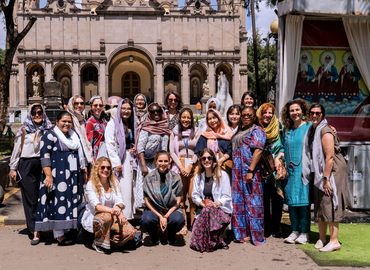
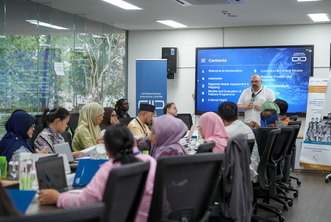
A decade ago, KAICIID launched the International Fellows Programme with a clear conviction that dialogue without policy change risks remaining symbolic, while policy without dialogue too often overlooks human reality. The real challenge and opportunity is to build a bridge between the two. We understood then, as we do now, that lasting peace can only be achieved when the people closest to crises are equipped with the tools, recognition, and support they need to lead solutions in their own communities. Across the world, it is often religious actors, community organizers, teachers, youth leaders, and women's networks who understand the first warning signs of tension. KAICIID created the Fellows Programme to bring those voices forward and to unlock the transformative potential they hold for their societies.
From its inception, the Programme recognised that dialogue is a strategic tool for building a more peaceful, resilient, and inclusive world. Today, we mark ten years of that vision in action, ten years of training leaders committed to bridging divides, strengthening communities, and transforming spaces of tension into opportunities for cooperation.
As we look back on this decade of engagement, innovation, and community leadership, I would like to reflect on some of the key takeaways and lessons learned from the many Fellows, partners, and local actors who have shaped this journey.
Lesson 1: Peace begins at the grassroots
Over the past decade, our Programme's success taught us an important lesson: sustainable peace cannot be outsourced or imposed from outside. It must be cultivated locally, with trust built by local leaders from within, community by community. This is why the Fellows Programme has placed so much emphasis on community-rooted leadership and focuses on context, relationships, and long-term commitment. Through locally rooted solutions in their diverse contexts, the Fellows have opened channels of communication and dialogue where none existed before. Ten years later, this approach has matured into a global network driven by a shared vision for peace.
Lesson 2: Dialogue is a tool for peace
One of the most persistent misconceptions is that dialogue is passive, idealistic, or secondary to peacebuilding. Ten years of experience tell us the opposite: dialogue is one of the most strategic tools for building resilient, inclusive, and adaptable societies.
During this decade, Fellows have planted seeds of dialogue in their local realities, and those seeds have grown into one of the most powerful resources for sustainable peace and development in contexts where polarization, identity-driven conflict, and disinformation have threatened human fraternity. In those same contexts, dialogue has succeeded where other approaches have struggled. Dialogue has changed hearts, but it has also changed institutions, policies, and systems.
Lesson 3: Empowering local voices transforms communities
The Fellows Programme was created to strengthen and amplify local voices, to ensure that communities speak for themselves. The transformation we celebrate today is seen in universities, community organizations, and local interreligious platforms. The impact has been concrete and far-reaching. Fellows have:
-
Established interreligious councils in fragile regions
-
Advised governments on social cohesion and inclusion policies
-
Trained young peacebuilders in schools and universities
-
Supported humanitarian responses during moments of crisis
-
Built bridges where history had erected walls
This is the outcome of empowerment: when individuals are equipped with the right skills, networks, and platforms, they can influence entire systems.
Lesson 4: Sustainable peace requires a community of practice
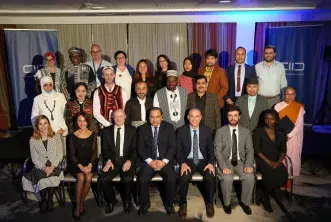
Another insight from the past decade is the importance of connection. The Fellows Programme has grown into a global alumni of practitioners who learn from one another, support each other’s initiatives, and collaborate across borders. Today, the network spans more than 100 countries. Its strength does not come from size – it comes from shared purpose. This community shows that peace is not the work of one institution, but of many actors working together.
Looking ahead: A call to renewed commitment
We believe deeply in the potential of our Fellows to advance peace and prosperity within their communities, and we will continue to strengthen the relationships, learning, and collaboration that sustain this global community. Ten years have shown us what is possible when dialogue is sustained, empowered, and practiced with conviction. The Fellows Programme now stands as a testament to what local leadership can achieve when supported by international cooperation and a shared commitment to peace.
As we enter the next decade, the world faces new and profound challenges. Rapid technological change, polarisation, rising extremism, and global inequalities threaten to undermine peaceful inter-community living. These pressures require an even greater investment in dialogue and mutual understanding. Our next decade must build on our successes, celebrating what has been achieved, but also strengthening the future we want to create.
If we want peaceful societies, we need to continue building peace from the bottom up by amplifying the voices of those who are trusted in their communities, and investing in the people who hold those societies together every day.
As we celebrate this milestone at KAICIID, we reaffirm our commitment to dialogue as a transformative tool for peace, justice, and human dignity. It is the responsibility of all of us, as global citizens, to ensure that this commitment continues and to work together toward a future where dialogue is not the exception but the norm.
The next decade of the Fellows Programme will deepen this commitment: expand opportunities, strengthen partnerships, and ensure that grassroots leaders have the resources, recognition, and reach they deserve.
The international landscape is going through one of the most critical and turbulent periods…
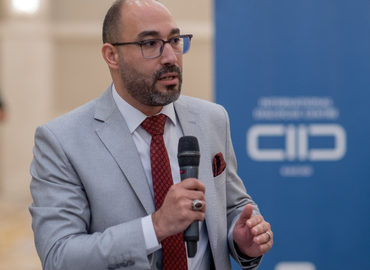
Hani Dawah, Deputy to the Senior Media Counsellor of the…