KAICIID at the 11th UNAOC Global Forum: Reaffirming the Power of Interreligious Dialogue through Decades of Practice

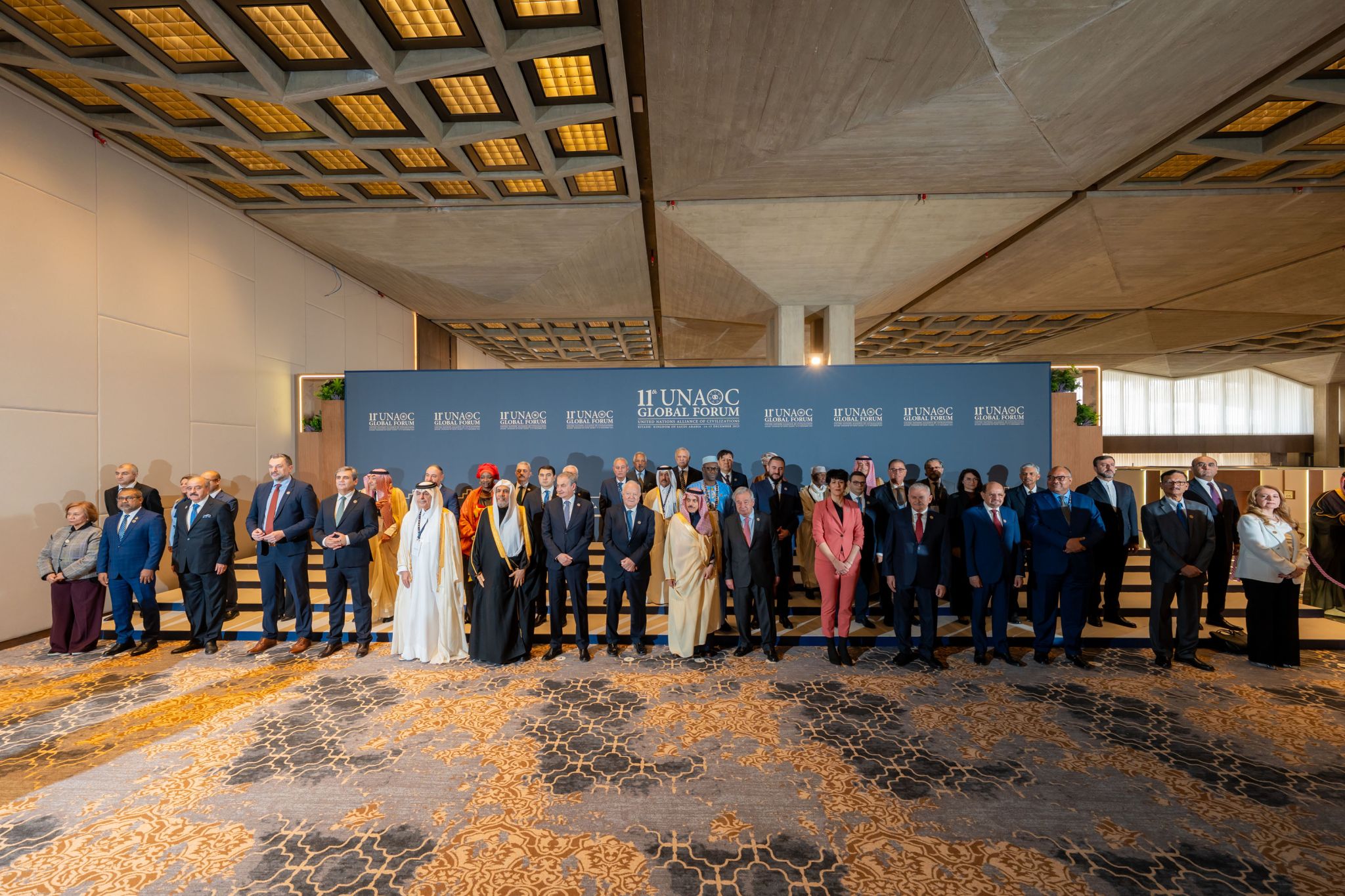
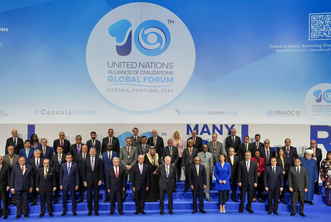
Hosted by the Kingdom of Saudi Arabia in Riyadh from 14–15 December 2025, KAICIID’s Founding Member State, the 11th Global Forum of the United Nations Alliance of Civilizations (UNAOC) marked two decades of impactful dialogue. The Forum brought together global leaders, policymakers, civil society, and faith actors under the theme “Two Decades of Dialogue for Humanity: Advancing a New Era of Mutual Respect and Understanding in a Multipolar World,” and reaffirmed the enduring power of dialogue in building bridges between civilizations.
The event showcased the critical cooperation of stakeholders across sectors, including faith leaders, policymakers, and civil society actors in advancing intercultural and interreligious dialogue. KAICIID, as a longstanding partner of UNAOC and member of its Group of Friends, actively engaged in diverse panels and thematic sessions, spotlighting examples of programmatic work across regions.
The ASG was warmly welcomed in a dedicated meeting with H.E. Waleed bin Abdulkarim al-Khereiji, Deputy Minister of Foreign Affairs of the Kingdom of Saudi Arabia, reflecting the host country’s support and recognition of the Centre’s work.
Elevating the Role of Interfaith Dialogue in Global Peacebuilding
During the Plenary Session 2, themed “Faith in Humanity: Interfaith Dialogue as a Bridge to Peace and #OneHumanity”, KAICIID’s Acting Secretary General (ASG) emphasized that neither diplomacy nor religion alone can fully resolve today’s complex conflicts, but together, they offer transformative potential in addressing global challenges.
Our Centre’s governance model is itself a diplomatic innovation,” the ASG stated, highlighting KAICIID’s unique structure bringing together Member States, including Austria, Saudi Arabia, Spain and the Holy See, alongside senior religious leaders from diverse faith traditions. “Diplomacy alone cannot reach every community. Religion alone cannot navigate every geopolitical challenge. But together, they can transform division into cooperation.
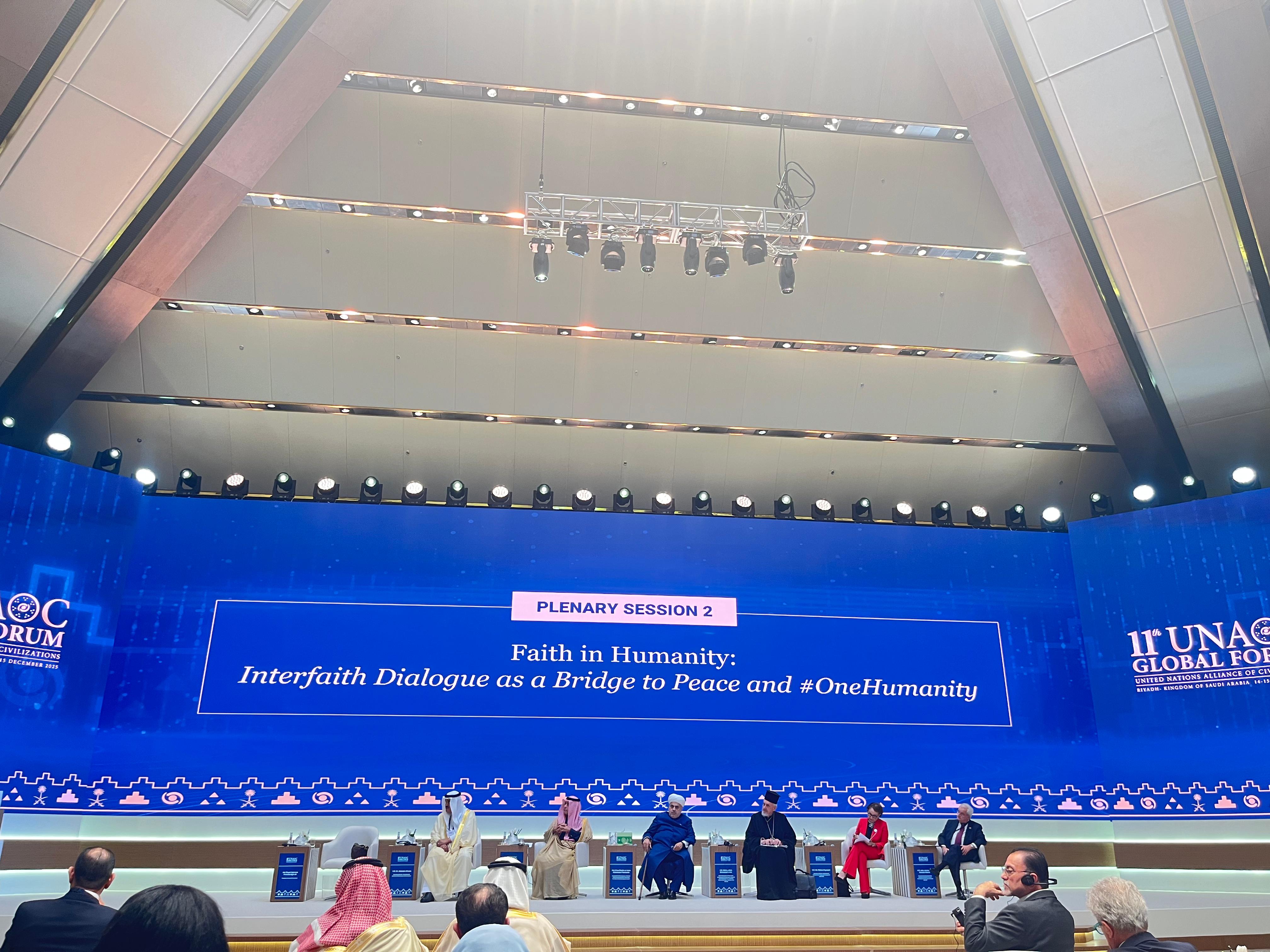
The session featured prominent religious leaders and KAICIID Board Members, including His Virtue Sheikh-ul-Islam Allahshukur Pashazade, Grand Mufti of the Caucasus, and H.E. Metropolitan Emmanuel Geron, Elder Metropolitan of Chalcedon, alongside Dr. Salim AlMalik, Director General of ICESCO, and Dr. Abdullah bin Mohammad Al-Foazan, Secretary General of the King Abdulaziz Center for Cultural Communication. The panel was moderated by Her Royal Highness Princess Rym Ali, underscoring the diversity of actors engaged in fostering dialogue and collaboration.
KAICIID’s participation highlighted its dual role as a platform and catalyst for interreligious dialogue, demonstrating how governance, faith leadership, and institutional collaboration can contribute to sustainable peace and mutual understanding.
Grounded in Impact: Local Solutions with Global Resonance
Across regions, KAICIID’s work demonstrates how faith-based actors can succeed where traditional diplomacy struggles. During the Forum, the Acting Secretary General shared practical examples of dialogue in action:
-
In the Central African Republic, Muslim, Catholic, and Protestant leaders supported by KAICIID mediated between conflicting parties in Obo, averting violence through trust and moral authority. Their intervention led to the peaceful release of detained soldiers, reparations to affected families, and the creation of a local early-warning committee.
-
In Nigeria, KAICIID-supported local peace committees addressed tensions during electoral periods, preventing escalation and fostering interfaith collaboration.
-
In Europe, platforms such as the European Muslim Leaders’ Majlis (EuLeMa) and the Muslim Jewish Leadership Council promote solidarity amid rising Islamophobia and antisemitism.
-
In the Arab Region, the Interreligious Platform for Dialogue and Cooperation (IPDC) and Dialogue360 initiative supported 25 local partners in 2024 alone, working to prevent hate speech, protect vulnerable communities, and embed shared citizenship values in education.
These examples show that when dialogue is locally led and institutionally supported, it generates real peace dividends,” the ASG noted.
Other initiatives spotlighted included:
- The Fellows Programme, celebrating its 10th anniversary, has been training a global cohort of dialogue practitioners, empowering faith leaders, women, youth, educators, and policymakers to mediate conflict, counter hate speech, and foster inclusive citizenship
- The Ethics Education Fellowship, implemented in Asia and Africa, has trained over 323 teachers and reached more than 4,400 children. In partnership with Arigatou International and other key actors, the initiative nurtures empathy, moral reasoning, and respect for diversity from a young age.
- The Dialogue Journalism Fellowship in the Arab region, equipping journalists to report ethically on pluralism and underrepresented narratives, amplifying positive stories of interfaith cooperation and social cohesion.
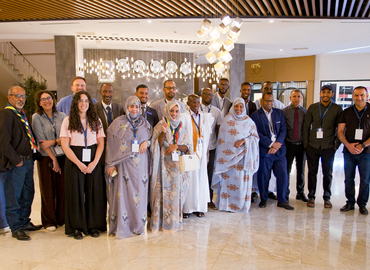
KAICIID’s Fellows, attending the Forum alongside the ASG, contributed their perspectives and experiences from their respective regions, highlighting how local dialogue initiatives translate into tangible, positive outcomes on the ground.
A Voice in the UNAOC Group of Friends
On the first day of the Forum, KAICIID took an active role at the UNAOC Group of Friends High-Level Meeting. The UNAOC Group of Friends, originally a coalition of 52 countries and international organizations supporting the initiative, has now grown to 161 members, reflecting its credibility, impact, and the trust it has earned globally.
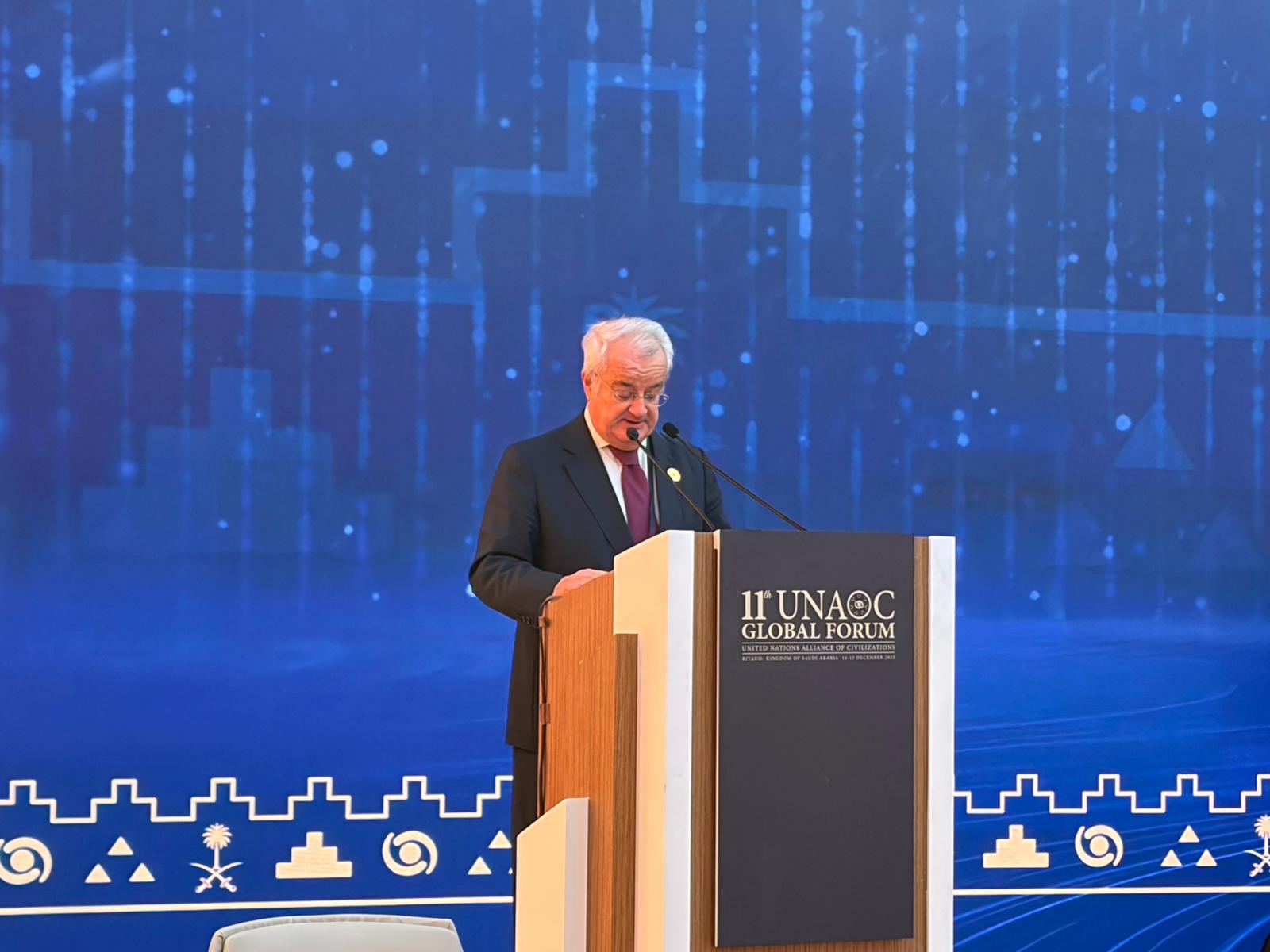
During the UNAOC Group of Friends High-Level Meeting, KAICIID reiterated its commitment to strategic multilateralism and people-centered dialogue. The ASG’s remarks echoed the UN Secretary-General’s call to integrate the moral voice of religion into conflict prevention and reconciliation efforts, underscoring KAICIID’s role as both a platform and a catalyst for this vision.
Heritage, Dialogue, and Sustainable Futures
On the second day, KAICIID was represented at Thematic Session 8, “Fostering Intercultural Dialogue, Revitalizing Heritage: Shaping Sustainable Futures,”. This panel explored the nexus between heritage preservation and intercultural dialogue as a foundation for inclusive societies.
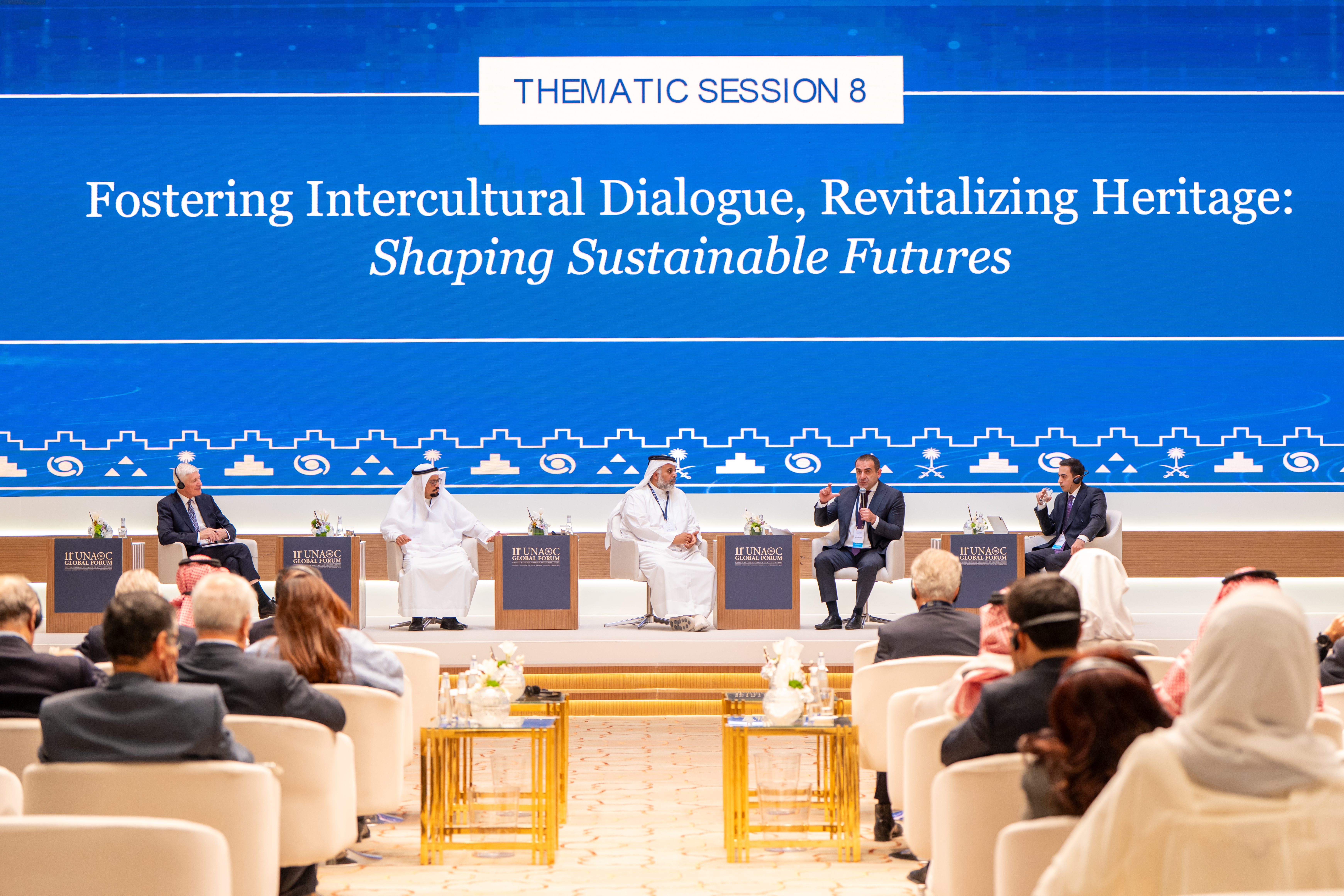
KAICIID’s interventions emphasized that safeguarding heritage, both tangible and intangible, is not merely about preservation, but about activating collective memory and cultural assets to strengthen social cohesion. Dialogue, in this context, becomes a living tool to connect communities across generations and geographies.
A Shared Agenda
The Forum culminated in the adoption of the Final Communiqué, reflecting a collective commitment to institutionalize the voices of faith actors, foster multilateral platforms for peace, and promote unity in diversity.
Beyond the formal sessions, KAICIID’s delegation actively engaged with high-level officials, international organizations, and partner institutions, strengthening its network of collaboration. Meetings included senior representatives from the Kingdom of Saudi Arabia, the Muslim World League, the United Nations Alliance of Civilizations, ICESCO, the Anna Lindh Foundation, and other key multilateral actors.
These exchanges laid the groundwork for future partnerships and joint initiatives, As the global landscape continues to evolve, KAICIID remains steadfast in its mission: to amplify local voices, connect moral authority with policy, and ensure that dialogue remains not just a tool of crisis response, but a cornerstone of a more just, peaceful, and humane world.